
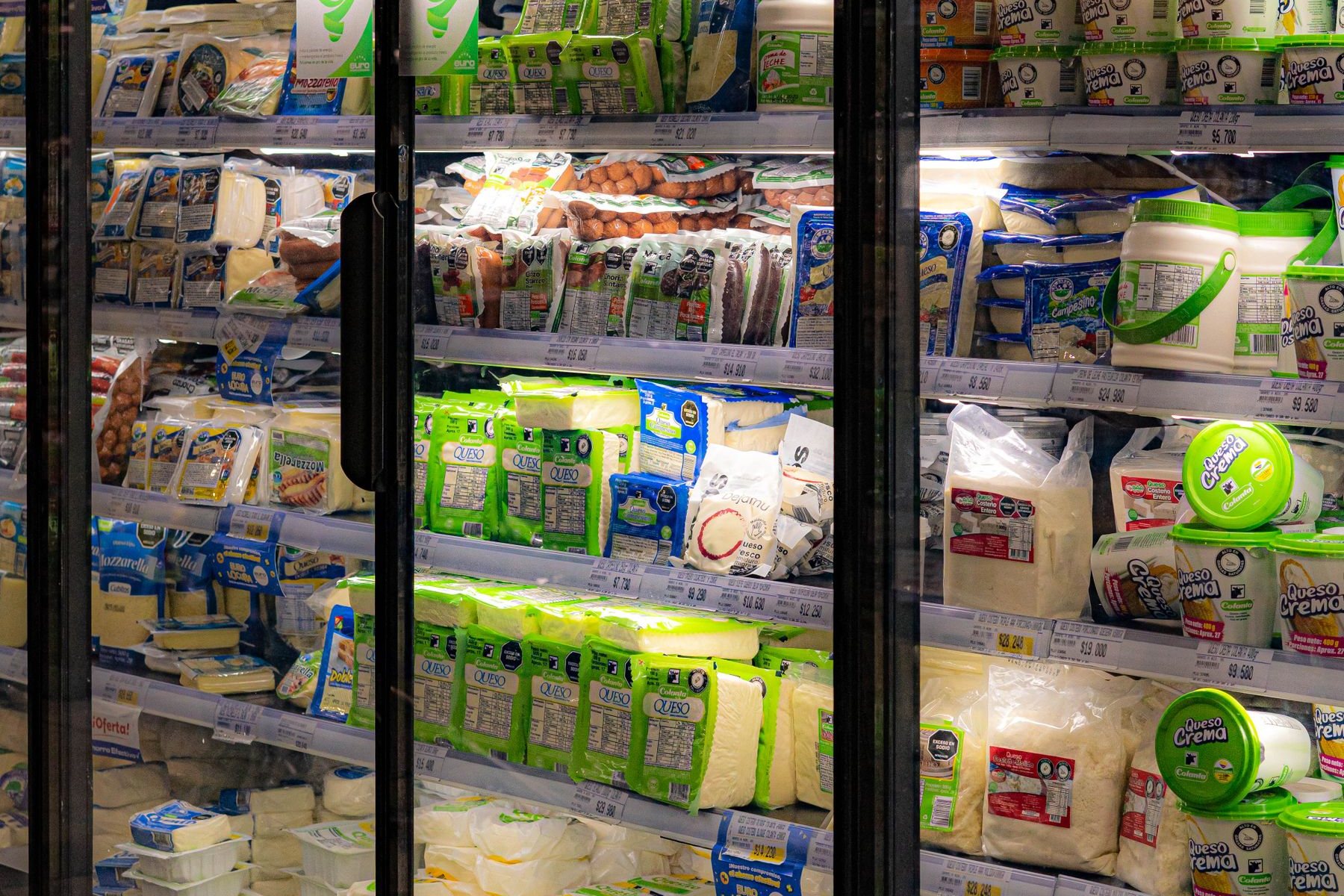
FIFO sends stock out by arrival, FEFO by the date printed on the product. In chilled goods lots arrive with different production dates, so a lot delivered yesterday can have a shorter life than one delivered a week ago, and selling by arrival leaves the short-dated stock waiting at the back.
| Example lot | Arrived | Date | FIFO order | FEFO order |
|---|---|---|---|---|
| A | Monday | 20 October | 1 | 2 |
| B | Wednesday | 14 October | 2 | 1 |
The rule is single; applying it depends on the shelf layout. At receipt record the date with the lot number, compare it with the dates of the same product already in stock and mark the lot to go first; if the date stays on the carton, make it visible on the pallet and shelf label as well.
Three things break the order on the shelf: the date facing the back, a new lot placed in front of an older one, and stock above shelf capacity. On a shelf filled from behind, new product naturally goes to the back; on one filled from the front, older stock has to be pulled forward, and that extra job is skipped at busy hours. In an overfilled cabinet older product gets buried and the air flow suffers too.
On the daily walk check that the next lot to go is reachable, its date legible and the same as the stock record. If you use colour codes, do not let them replace the printed date; expired product or product with an unreadable label is taken out of saleable stock.

