
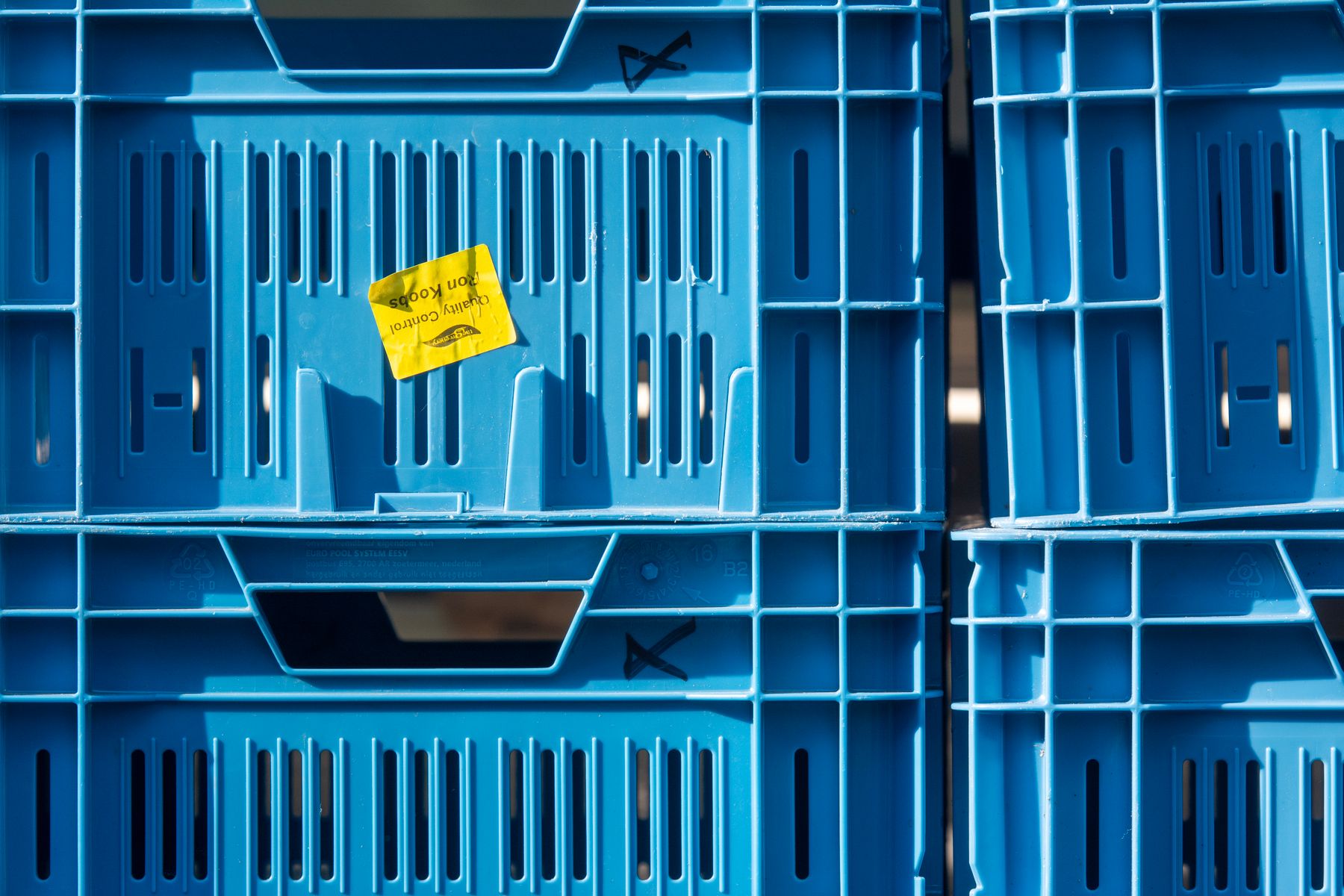
The place of a label matters as much as the label: a good label in the wrong spot lives shorter than an ordinary label in the right one. The right place is one that can be read and does not get damaged, and on most containers those two conditions do not meet at one point.
Four zones, two problems each
On the front face eye level reads easily, but knocks and rubbing are worst there. The top of the side face is sheltered, yet it can be hidden once containers stand side by side. The lid top is visible in the open, but rain and wash water hit it directly. The lower zone is sheltered but cannot be read without bending. That is why two labels help: one on the front face slightly below eye level in a sheltered recess, and a backup near the top of the side face. When the first wears out, the second keeps the identity, provided both codes are tied to the same asset record.
Trial in the warehouse
Pick the position by going down to the warehouse and looking. When containers stand side by side the front face stays visible and the side face is covered; if your stacking differs, the label position differs too. Try the read distance with your hand terminal and fixed reader. If you want long-range reading, raise the label size and height together.
Standard and new batches
Write the decision in one sentence: on every container the label goes on this face, at this height, in this orientation, with a template or photo beside it. Without a written standard each container carries its label somewhere different and reading takes longer. Label a new batch in one go right after the first wash; changing the position later in a fleet already in use means carrying the marks of old labels and two layouts together.

