
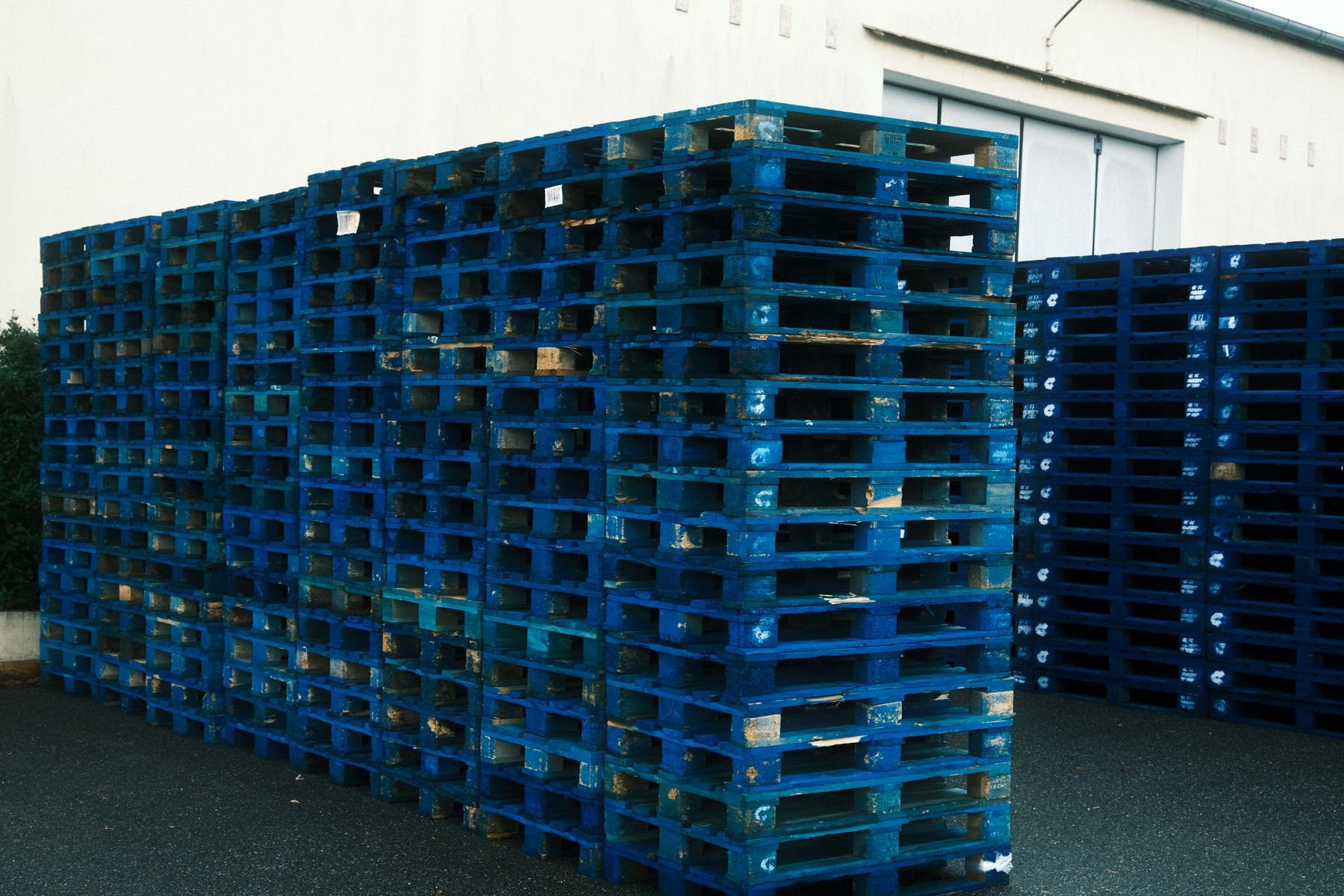
The surface with the most food contact is not the packaging but the pallet or crate underneath. A wooden pallet is cheap and repairable, but its porous structure holds water and organic residue, it is hard to wash and slow to dry, and for export ISPM 15 additionally requires heat treatment or an equivalent measure plus marking. A plastic pallet can be washed, holds no residue; in exchange the purchase price is higher.
Without washing facilities the advantage of plastic stays on paper, since dirty plastic is no better than dirty wood, and a plastic fleet that does not come back melts away quickly. The decision therefore rests less on the equipment than on who is responsible for returns, how often it is washed and whether the fleet is counted.
Separate four points on the floor, set up a one-way layout and make sure clean containers never cross the dirty-return path:
- Dirty receipt
- Pre-wash holding
- Washing and drying
- Clean equipment stock
Each shift, count what was received, washed, set aside as damaged and placed in the clean area; if the totals do not reconcile, equipment of unknown status stays out of clean stock until it is traced. Cracked, broken or incompletely dried items leave the floor, go to repair or scrap, and do not come back from there.


