
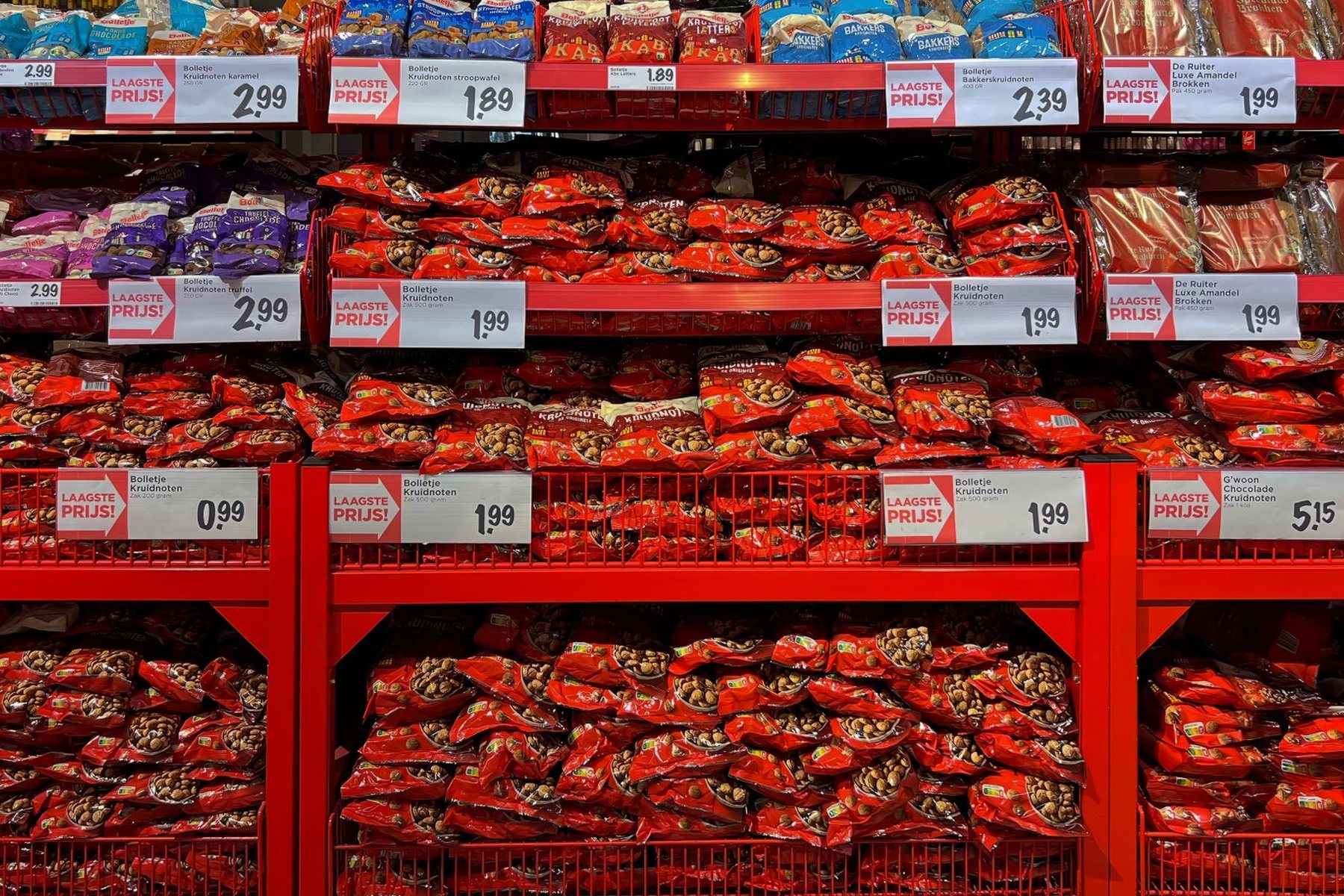
First in, first out works in a warehouse and keeps breaking on a retail shelf because of two opposing movements. Staff put new stock at the front because it is easy; customers reach to the back for a longer date. The oldest product stays on the shelf and goes to destruction when its date passes.
The lasting answer is shelf design. On a rear-loaded shelf the product slides forward and the correct order holds by itself. Without one, old stock is brought forward during merchandising, lots with different dates are kept in separate sections of the shelf, and the shelf is filled to sales rate.
When arrival order and product date part ways, FEFO applies: the lot that expires first goes out first, and when the dates match the earlier arrival is used. Under Article 24 of EU Regulation 1169/2011, food past its use-by date is deemed unsafe. That is why lot number, arrival time and product date are recorded together at intake.
- fill the shelf to sales rate
- separate lots with different dates
- mark products taken from the back and revisit the order quantity
