
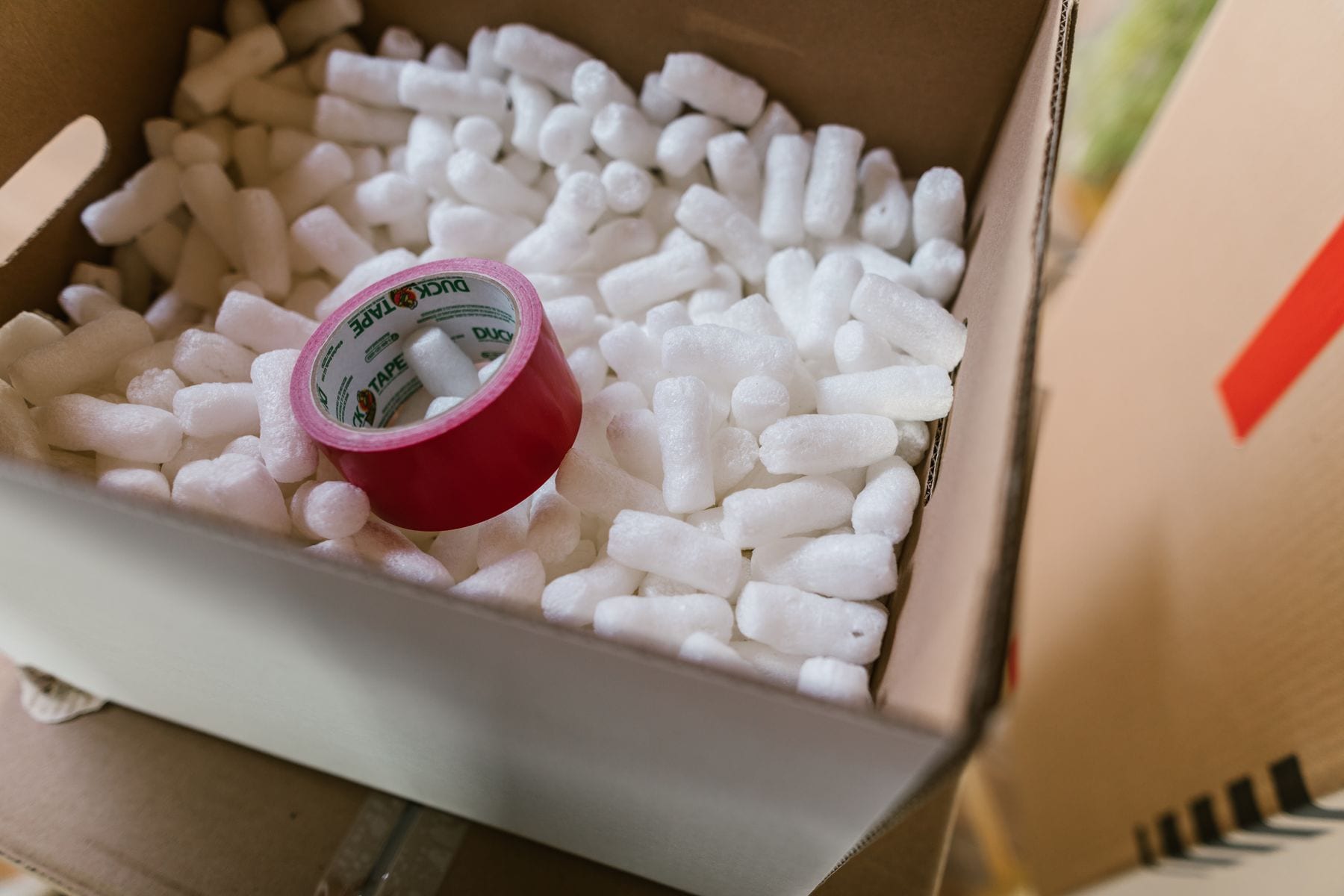
Tape keeps a correctly seated polystyrene lid shut through the shipment, but it does not fix a raised lid or a crushed edge. If the lid does not sit level on all four edges, more tape does not close the gap; it only hides it.
- Dry fit: seat the lid without tape and find the product, liner or coolant that lifts it. If one corner stays open, set the box aside or change the layout.
- Tape choice: pick a tape that keeps its grip at low temperature, comes off without tearing the surface and leaves the address label visible; ask your supplier which type suits.
- Sample shipment: trial a box closed with the real tape on the planned loading and route. Set the number of wraps from this trial, not by guesswork.
- Recipient: mark the opening point so a blade cannot reach the product or liner. If security tape is used, write into the delivery instruction how a disturbed tape is recorded.
If the foam surface or the seating edge tears when the tape comes off, do not put the box back into circulation; photograph where the damage is and sort the box against a written acceptance criterion. Wrapping a broken corner tighter is not a repair. If reuse is planned, the trial should include the removal step, because how the second round closes depends on the surface the tape leaves after the first opening.
In a returnable flow, compare closing, opening, inspection and waste together. In a container that cleans easily and can be repaired, damage is often repaired rather than turning into waste; GEBHARDT states this for the Isotec TBX.
