
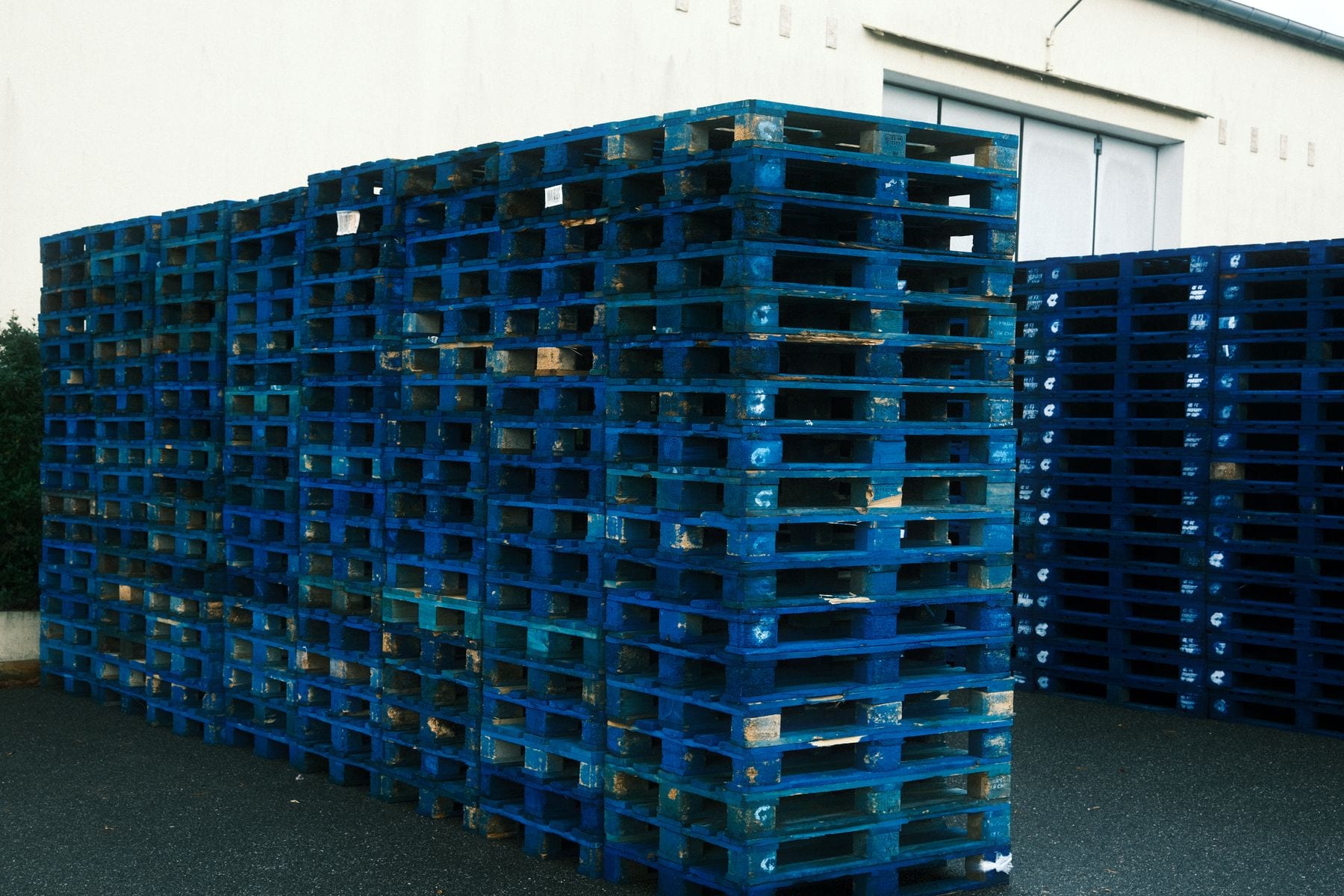
The EPAL 1 Euro pallet and the CHEP European Wooden Pallet 03 share the same 800 × 1200 mm footprint but have different load ratings: a safe working load of 1,500 kg for EPAL 1 and a maximum uniformly distributed load of 1,000 kg for CHEP 03; both weigh about 25 kg empty. How a container relates to these pallets breaks into three questions:
- Does the container stand stably on the pallet?
- Does the container on a pallet fit efficiently in the vehicle body?
- Does the container's own base already serve as a pallet?
The third question often changes the answer. A container with its own base is not placed on another pallet, the pooled pallet question disappears, and how the base footprint arranges in the vehicle takes its place. If you work with a pooled pallet, that pallet has to come back too; that is a second return flow, and managing two flows is more complex than a container that carries its own base.
In the vehicle, the internal body width sets how many rows fit side by side and the internal length how many rows deep; whether a pallet truck or a forklift is used also affects the layout. The most overlooked measure is the door: a container that fits the body but not the doorway is useless, and this can be seen on paper before purchase.
With the container's base footprint, height, doorway width and empty weight written on one card, questions about vehicles, pallets and lifts are answered from the same source. Ask Aris Makina for the container drawing, and take the pallet code from the pool used on the shipment, because a shared footprint does not show another pallet model's load limit.

