
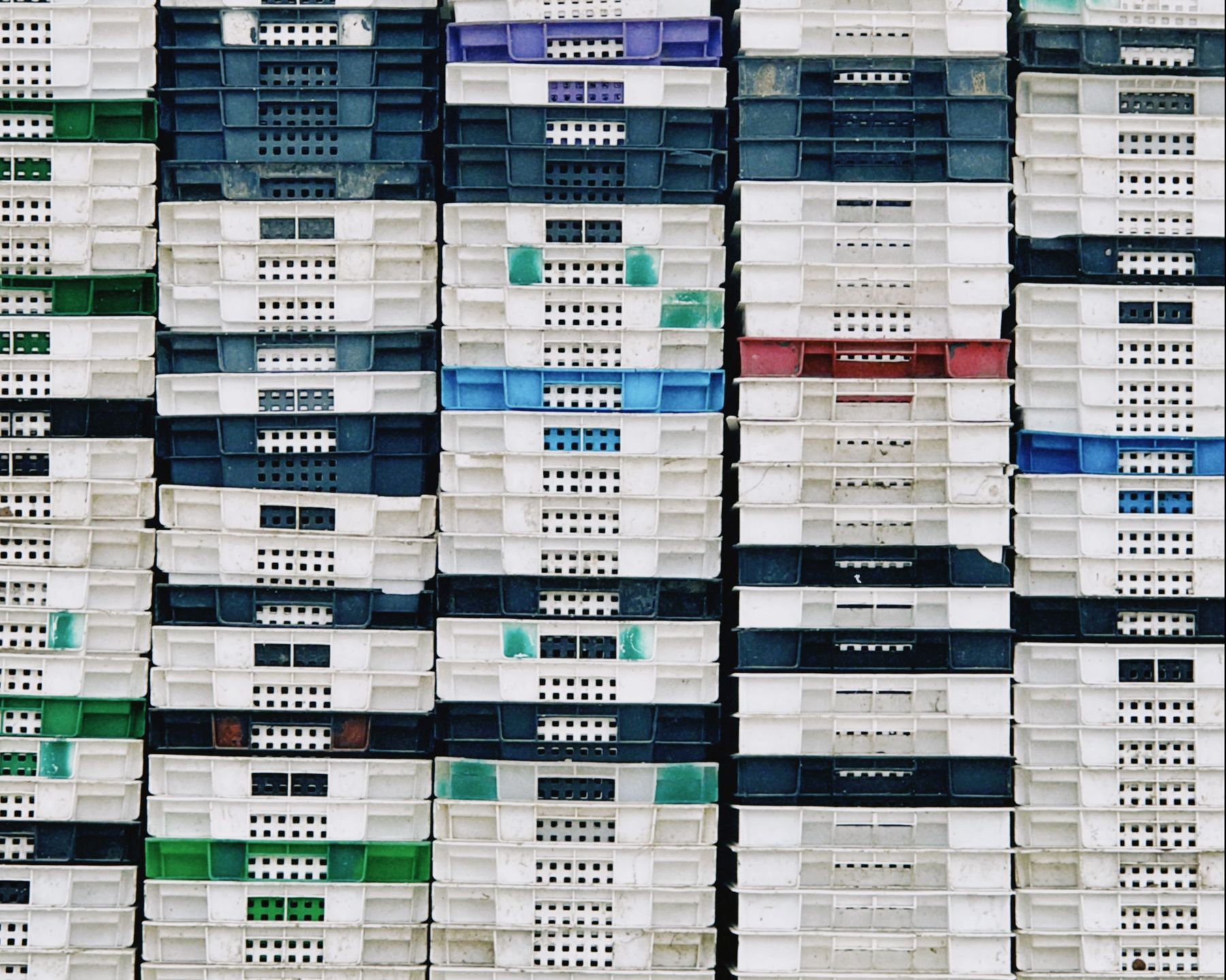
A lid is designed for sealing; whether another container may stand on it depends on a load-bearing approval stated separately in the model's document. Give Aris Makina the model code and we obtain the stacking permission and load limit and pass them on. Without approval in the document, do not treat the lid as load-bearing.
The load is not just the weight at rest either. The EU cargo-securing guidelines require the restraint to withstand 0.8 times the weight forwards and 0.5 sideways and rearwards (0.6 sideways where there is a tipping risk); the container above loads the one below with that force. Vertical vibration also reduces friction between containers and makes sliding easier.
Tipping often comes into play before the lid does. A two-tier stack 60 cm wide with its centre of gravity 1 m high starts to tip when lateral acceleration reaches 0.3 times the weight (30 cm over 100 cm); narrow, tall shells go over sooner than wide, low ones. Whichever of this calculation and the model's document is more restrictive sets the number of tiers.
Before and after stacking look for dishing in the middle of the lid, an uneven gasket mark or a latch that closes hard; if you find any, take the upper load off and set the container aside.

