
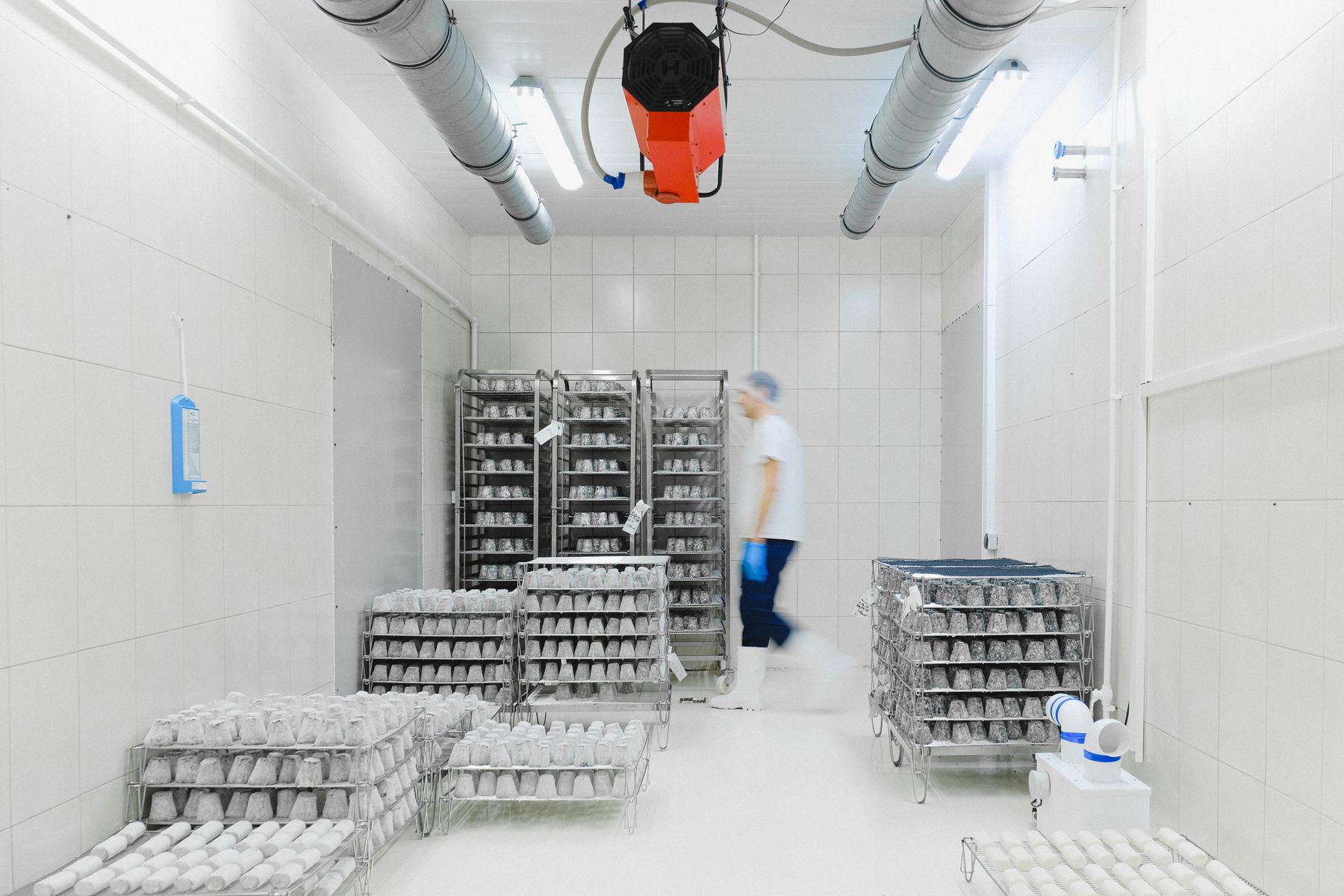
Hatching eggs do not want refrigerator temperature; what they want is a history without sudden change. Each carries an embryo ready to develop. Wageningen University's doctoral thesis summarises that storage beyond 7 days lengthens incubation and lowers hatchability and chick quality.
The share of fluctuation was measured in Poultry Science in 2018. Ross 308 eggs were held for 7 days either at a constant 18 °C or, in a pattern mimicking the opening of a storage-room door, cycled between 18 and 21 °C for 40 minutes three times a day. In the 27-week flock this reduced early embryonic mortality; in the 50-week flock it increased it and lowered hatchability of fertile eggs. A three-degree rise does not act the same on every batch.
- Record every step from collection to delivery (store exit, loading, transfer, hand-over) against the batch code, with time and responsible person.
- Take the target temperature from egg age and the receiving hatchery's instructions; put the logger beside the tray and compare readings with that target.
- Stack trays so they cannot slide and wait in shade on the ramp; do not take cold eggs straight into warm, humid air, because water condenses on the shell.
- For shipments with transfers, get a time and condition confirmation from each carrier and do not fill a missing interval with a guess.
An insulated container that stays shut changes its interior temperature slowly; for hatching eggs that works as a buffer that flattens the day's outside swing. Keeping the lid closed while waiting on the ramp avoids the sharpest jump of the journey.