
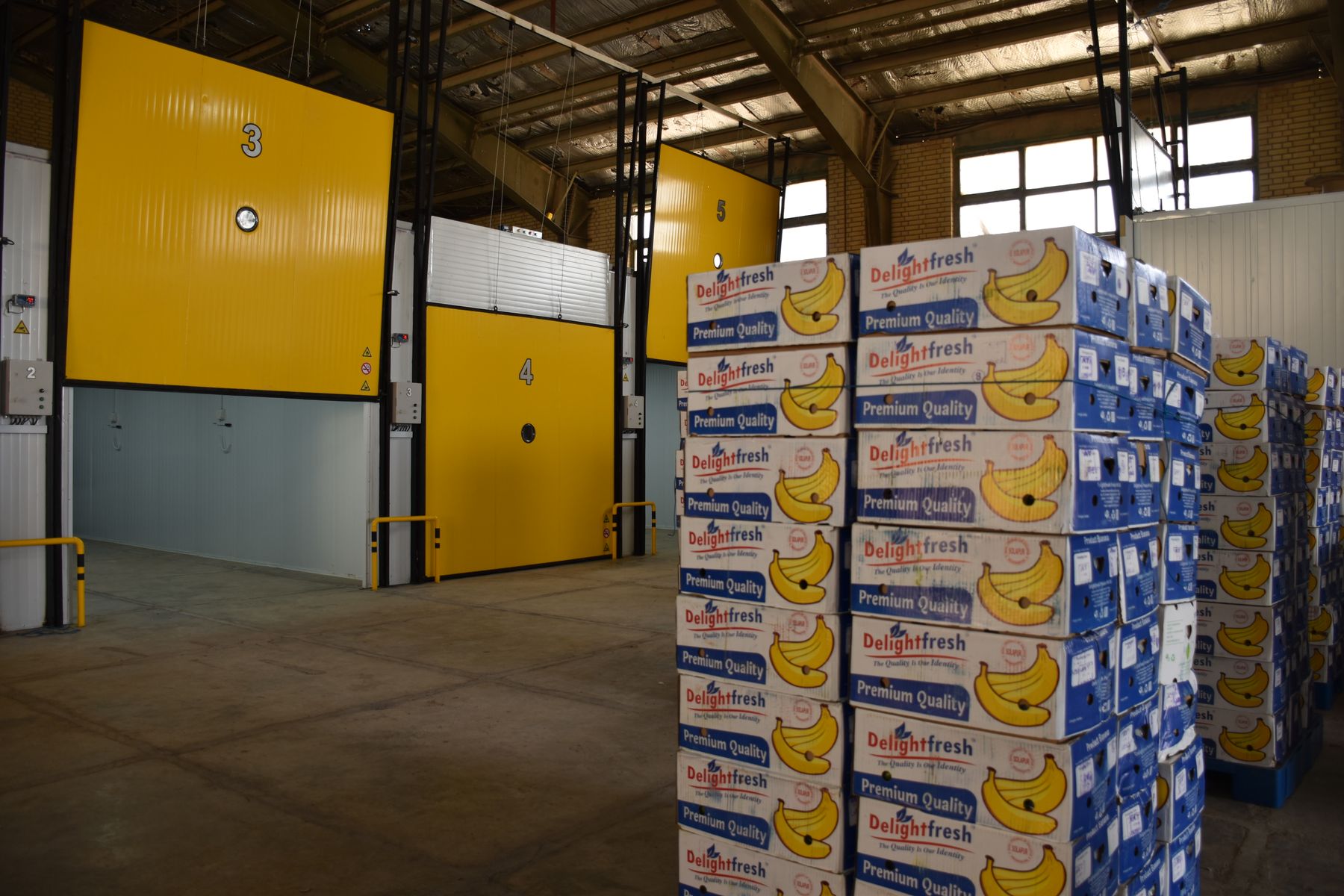
The rule of the cold chain is to keep the temperature low and allow no interruption; with bananas that rule is loosened on purpose at one point. The fruit arrives green and is coloured under control in a ripening room. According to USDA Agriculture Handbook 66, green bananas travel and are held at 13-14 °C and 90-95% humidity; below about 13 °C the peel darkens and the fruit may fail to ripen.
What happens in the room
The room is held at 14-18 °C, sealed and dosed with ethylene; most commercial cultivars need 24-48 hours of it. Humidity is 90-95%, lowered to 85% once colour starts so the peel does not split. Ventilation keeps carbon dioxide under 1%, because carbon dioxide delays the effect of ethylene. If the starting temperature goes above 25 °C the pulp softens while the peel stays green.
Temperature sets the length: above 18 °C the cycle shortens to as little as 4 days, at 14 °C it stretches to 8-10. A fast programme means early sale and a slow one longer life in store, chosen against the store's ordering rhythm. Bananas usually leave for distribution at 3-4 on the 1-7 colour scale.
After the room. Ripe bananas are also chilled below about 13 °C, and refrigerated shelves in stores are usually too cold for them, so a lot leaving the room goes to around 13 °C rather than into deep cold. Ethylene also harms green vegetables, so the room is vented outside once the exposure is over and the area around it is aired at least once a day.
