
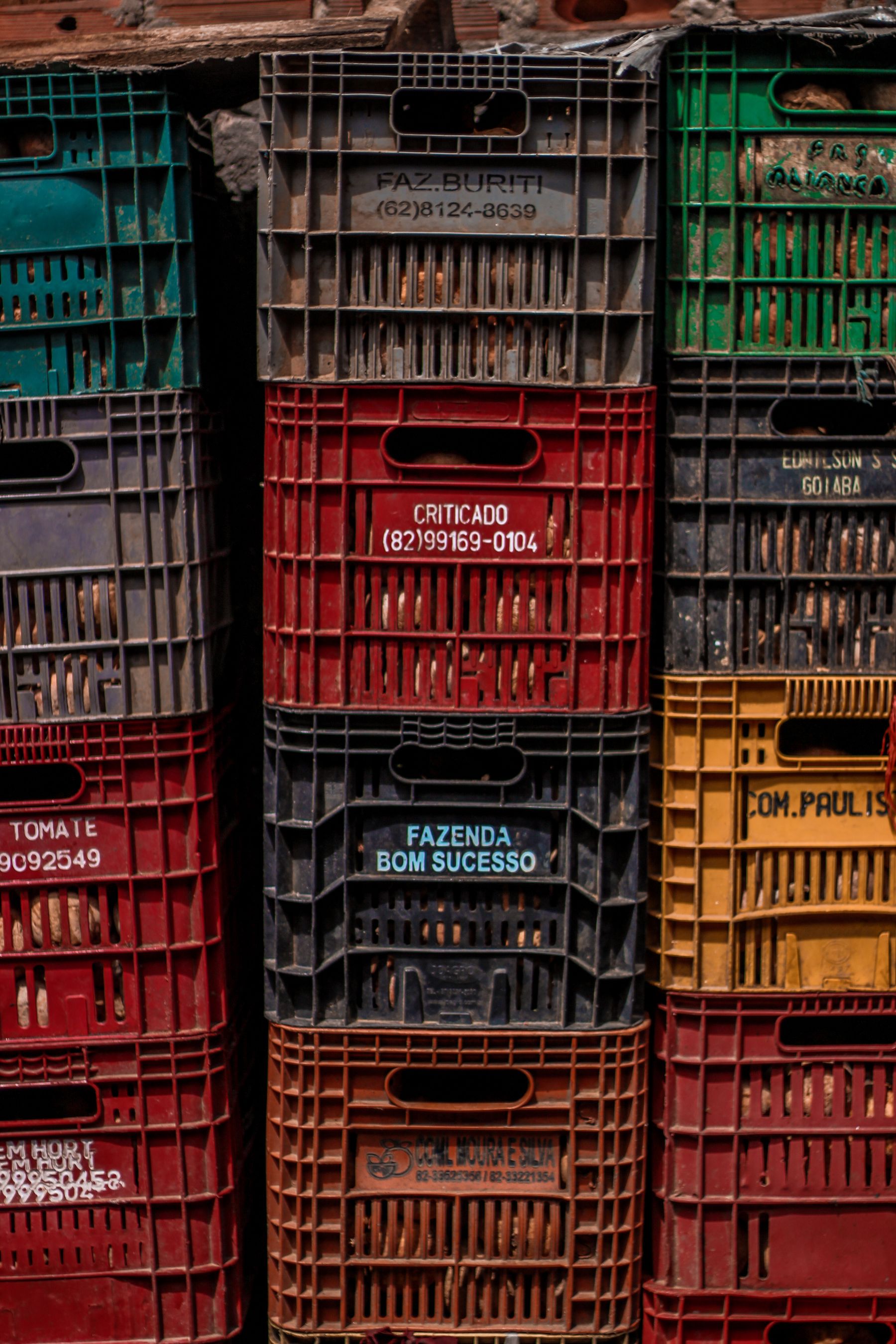
Fraunhofer UMSICHT's 2022 report finds that up to 100 rotations and about 10 years are realistic for a plastic reusable produce crate; across the studies it reviewed, rotation counts range from 1 to 700. In the same report ALDI SÜD's head of national logistics says that in a system with inventory loss below 1 percent the average life is 12 years and that 120 rotations are easily reached by a well-run operation.
The arithmetic is simple: in a steady system, the inverse of the rotation count equals the sum of the loss rate and the retirement rate.
| Total loss per rotation | Rotations |
|---|---|
| 0.8 percent (expert estimate, loss only) | 125 |
| 1 percent | 100 |
| 1.33 percent (loss 0.8 plus breakage 0.53) | 75 |
Crates leave the system mostly because they do not come back, not because they break: the report gives 0.12 to 0.53 percent for breakage and 0.8 to 1.33 percent for total loss, while less than 0.5 percent are retired as irreparable. In ALDI SÜD's account, three things raise the rotation count: movements recorded by every party, repair of defective crates and few crates retired.
To find your own figure, put the number of crates in the pool, the dispatches during the year and the year-end count side by side; rotations and loss follow from those. Give every crate an ID and count losses separately from breakage.

