
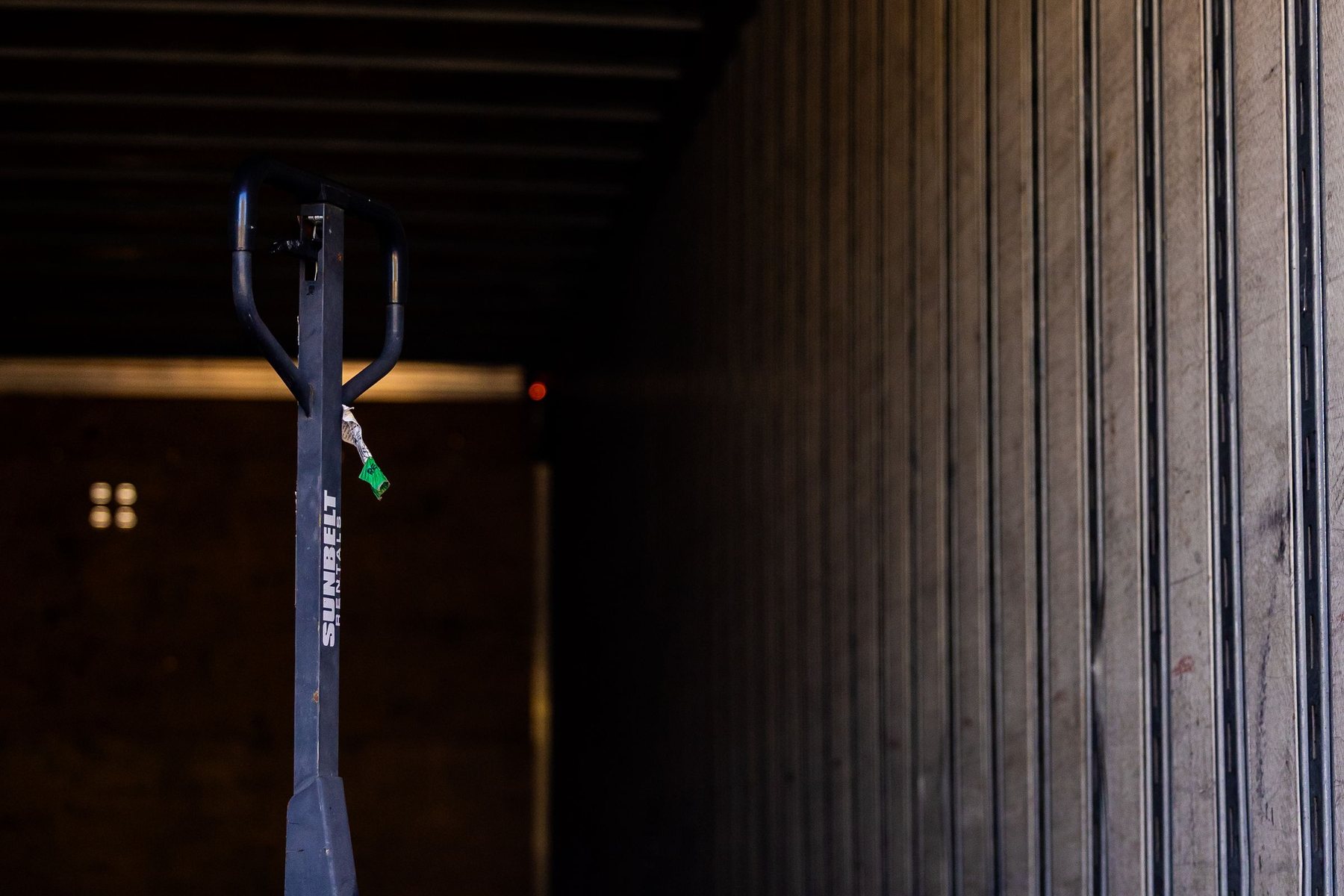
In Turkish the refrigerated body is called frigorifik kasa, which the trade also calls frigo kasa. Frigorifik means refrigerating, and the TDK dictionary defines kasa as the upper part of a wagon, lorry or tractor attached to the chassis to carry the load. Put together, they give the insulated box that sits on the chassis and protects the temperature of the load. The ATP roadside inspection guide, published under the Ministry of Transport and Infrastructure's ATP project, shows a refrigerated vehicle as four parts: the chassis, the insulated equipment (also called the refrigerated box), the cooling unit and the temperature recorder.
What is a refrigerated body made of?
| Part | What it does |
|---|---|
| Outer skin | The shell against weather, impact and sun; glass-fibre reinforced polyester or metal |
| Insulation layer | Slows heat transfer; polyurethane foam is the usual material in refrigerated bodies |
| Inner skin | A cleanable, food-compatible surface |
| Floor | Carries load and moisture, with drainage |
| Doors | Seals and latches are a main point of heat entry |
| Air ducts and curtains | Direct the internal air circulation |
| Refrigeration unit | Not part of the body; it carries heat from inside to outside and is selected and fitted as separate equipment |
The vehicle that results when chassis, body and unit come together is explained in what a refrigerated vehicle is. An insulated body with no thermal device fitted counts as insulated equipment under ATP and is called an isothermal (izotermik) body in the trade; that distinction is covered in refrigerated, insulated and chilled vehicles compared.
How insulation thickness sets the regime
ATP defines insulation by the heat transfer coefficient K: K is at most 0.70 W/m²·°C for a normally insulated (IN) body and 0.40 W/m²·°C for a heavily insulated (IR) one; on equipment wider than 2.50 m the side walls of an IR body must also be at least 45 mm thick. In classes that go down to -10 °C and below (B, C, E, F) K may never exceed 0.40; a body for frozen product is therefore built with more insulation than one for chilled. According to the MEB module, values such as K ≤ 0.40 are usually reached with 80-130 mm of polyurethane at 38-40 kg/m³. As thickness rises, net internal volume falls and the number of pallets carried is affected (refrigerated body dimensions and internal volume), so the choice trades insulation against volume.
Heat passes wherever insulation is weak: corner profiles, the floor-to-wall joint, the door frame, lighting and service penetrations. ATP has a body in service checked at least every six years; the inspection looks at the structure and condition of the walls, the way the insulation was applied, wall thickness and air-tightness. On a used body look for water marks, bubbling, a soft floor, separated seals and repair history; smooth paint does not show that a panel is dry.
The floor carries the load and drains wash and condensation water; where drainage is blocked, water collects and cartons get wet. Shelves, guide rails, load bars and dividing curtains secure the load, and a layout that keeps the load off the walls and floor leaves the air path open.
Buying and inspecting a used body
- Match the chassis maker's bodybuilder and load-limit document, the body drawing and the net internal dimensions.
- Record panel, floor, door, seal, drain and repair history; read the class on the ATP plate.
- Verify unit model, power source and service access in a separate list.
- Do not decide from the feel of an empty body: run an acceptance measurement with the planned load, pre-cooling and door-opening scenario, and file sensor positions and logging interval.
For a panel van, usable volume and door traffic lead; for a rigid truck, chassis load and body weight; for a trailer, tractor compatibility and service access. Have the quote state which body it covers. For a smaller or passive workflow, compare container and route inputs on the refrigerated vehicle alternative page.