
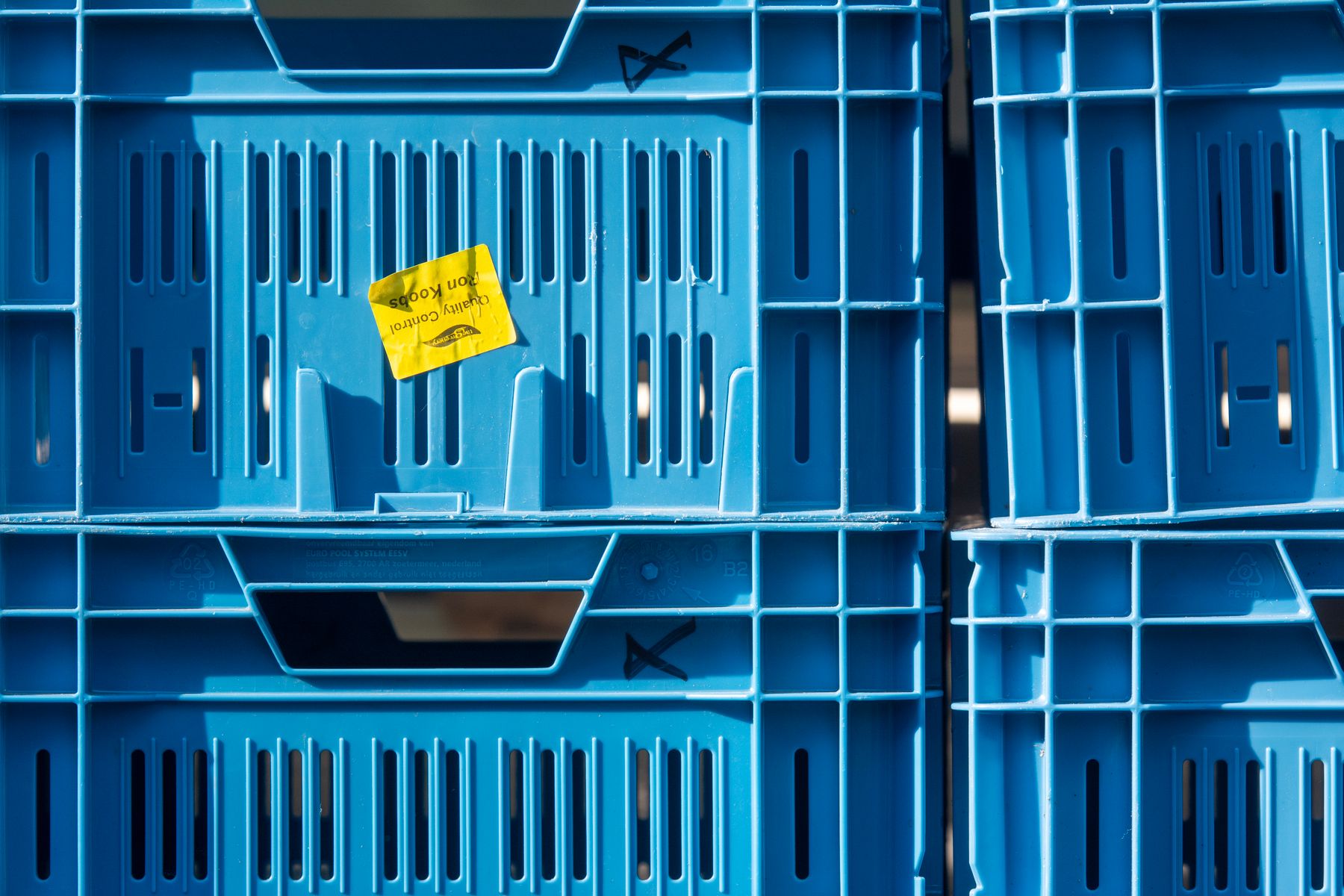
Where the crate will live decides the material. HDPE stays ductile in the cold: in laboratory HDPE samples the ductile-to-brittle transition stays below -70 °C, so an HDPE crate dropped in a frozen store flexes instead of cracking. Homopolymer polypropylene, by contrast, fails in a brittle way in notched impact tests. Rubber-modified PP grades lower the transition; at 25 per cent rubber and above it falls below -10 °C.
Hot washing reverses the picture. HDPE melts at about 135 °C and PP at a higher temperature, so crates washed often with hot water and detergent on an automatic line favour PP.
Two crates called by the same letters do not perform the same, because resin grade and impact additives change the behaviour. When choosing, ask for the resin grade, the working temperature range and the impact data; without data, trial a sample under the coldest and most frequently washed real conditions. Compare on cost per cycle rather than unit price: the purchase price divided by the trips the crate will make over its life.