
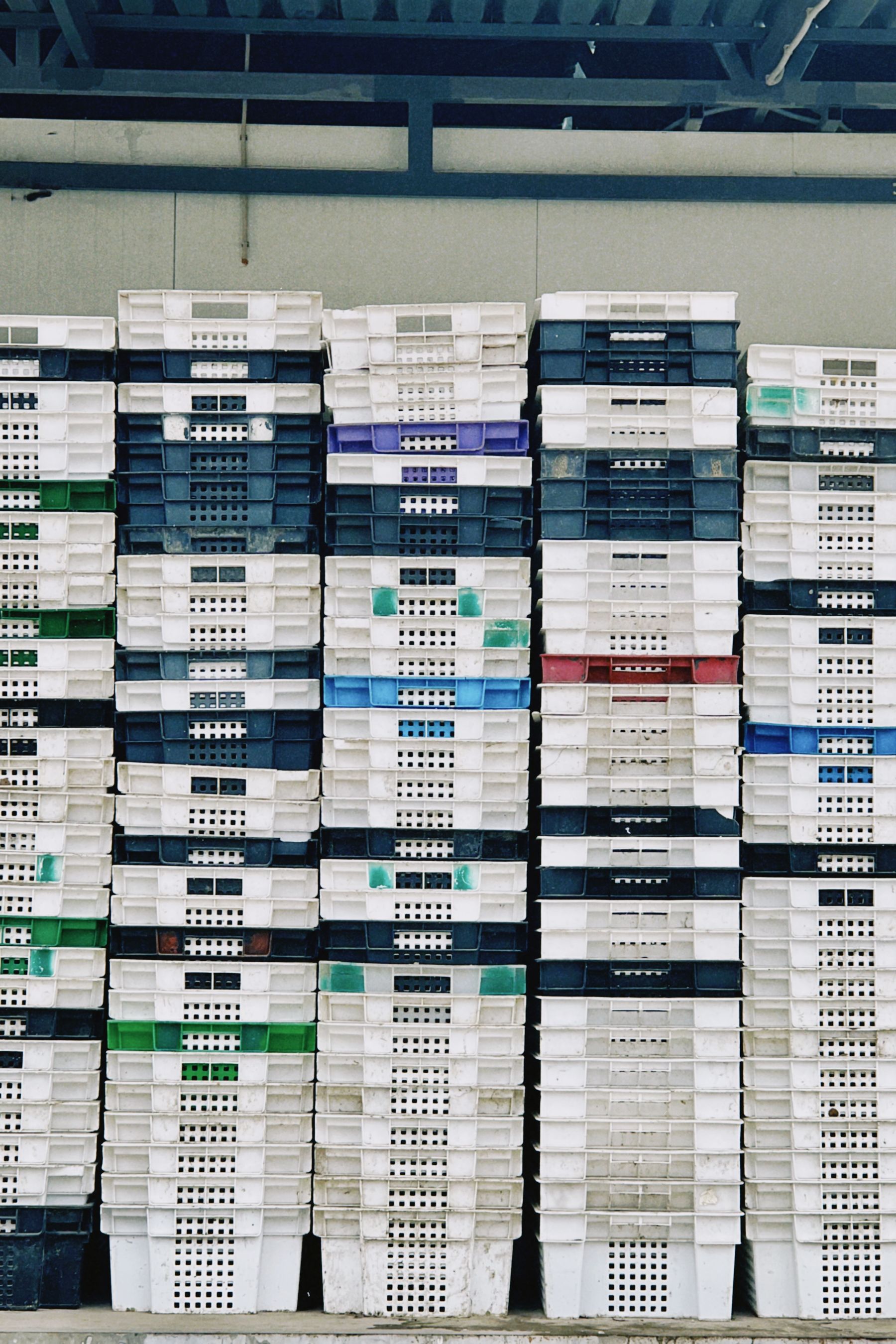
A catalogue gives two sets of dimensions and you need both: external ones decide where the container fits, internal ones how much goes in. The difference is the insulation thickness, and in thick-walled containers it is larger than expected.
- Vehicle layout, doors, aisles, lifts and pallet patterns: external size (including handles and base projections)
- How many crates or boxes fit: internal size
- Plate placement: internal size
From the internal size, the space taken by plates, shelves, dividers and the air allowance is deducted; what remains is what the product gets. Skip that deduction and the order plan is one box out every time. A thick-walled container carries less product at the same external size, because the insulation that holds cold longer is taken from the internal width.
The most practical test is to count how many of your standard crates fit; a few centimetres of clearance between crate and wall is normal, and a crate rubbing the wall lengthens loading. In containers with sloping sides the size at the opening and at the base differ, so take the internal size with a tape measure on a sample and put both internal and external reference sizes on the order. For Isotec TBX, this calculation is worked through in Euro crate layout by TBX internal size.

