
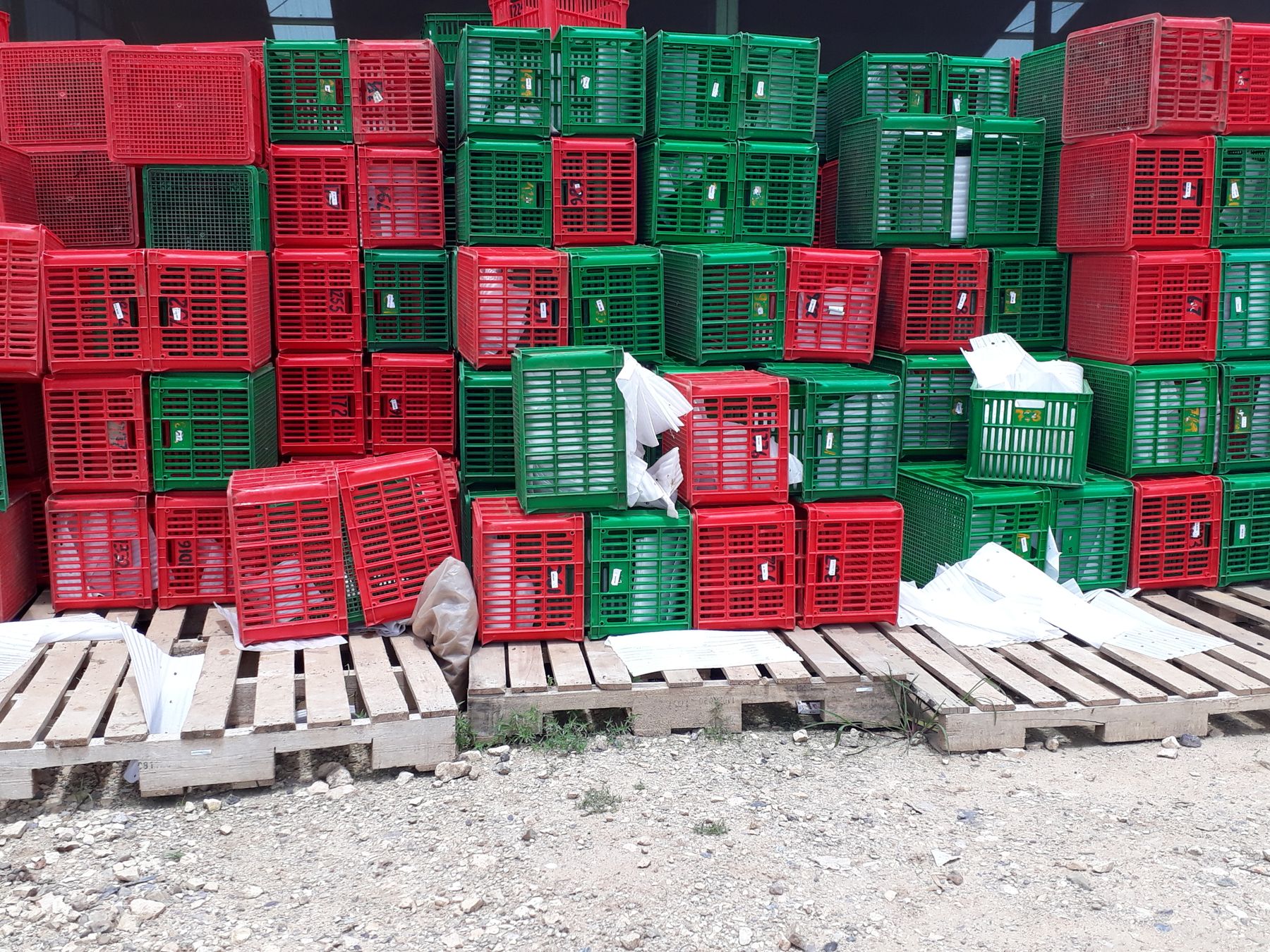
Article 13 of the Turkish Food Hygiene Regulation (Official Gazette 28145, 2011) requires that vehicles and containers used to carry food are kept clean so that the food is protected from contamination. A container back from a store may hold product residue, packaging fragments or liquid; at the depot it goes to the washing line. The hard part is that nobody wrote down who does what.
| Soiling | What happens |
|---|---|
| Product residue, liquid | Food safety matter: flagged, washed on a separate line and disinfected |
| Dust, street dirt | Usually solved by wiping |
| Heavily soiled | Taken to a separate line, recorded by store |
Who does what. The split that works is this: the store empties the container without leaving residue and wipes any spill, and washing and disinfection happen at the depot. Unless that split is written into a contract annex, every shipment reopens it. Sending the dirty container back to the store on the vehicle only postpones the problem; once the container is accepted and soiling is recorded by store, the picture concentrates in a few stores and the solution comes down to a conversation with them.
The washing line has finite capacity: past it, containers queue, do not dry and get stacked wet, and a damp container picks up odours and leaves residue in the gasket channel. So each container is not washed every time, but according to its condition. The hardest place to clean is the seat of the lid gasket, and unless the washing procedure lists it as its own step, it gets skipped.

