
Two days can share the same temperature and the humid one still makes the container's job harder. The cause is the water vapour in the air: humid air that enters when the lid opens condenses on the cold surface, and the energy that turns the vapour back into liquid stays inside. That heat does not show on a thermometer, it comes off the plate's capacity.
The amount looks small but the effect is large. Water vapour releases about 2.4 MJ/kg as it condenses, while ice absorbs 334 kJ/kg as it melts. One gram of condensate therefore releases enough heat to melt about seven grams of ice. A humid day on the coast and a dry day inland can share the same temperature and still give the container different hours; part of the summer "performance drop" comes from humidity.
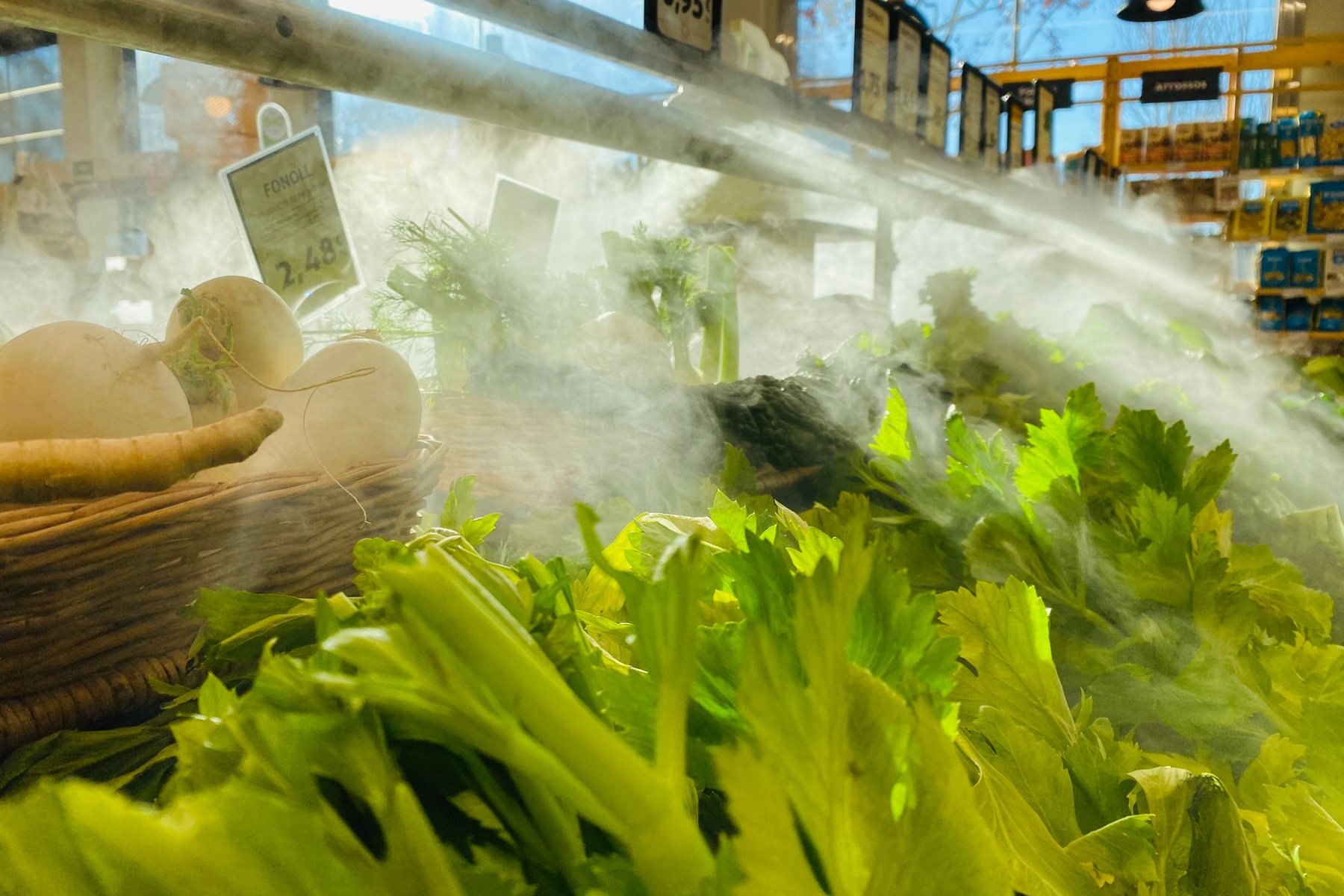
Condensate wets packaging and weakens cardboard, the outside of the container sweats continuously, and frost builds faster in frozen-goods containers. Humidity is not unwelcome for every product: fresh greens are stored near 0 °C at 95-98 percent relative humidity, and in dry air they lose water and wilt.

