
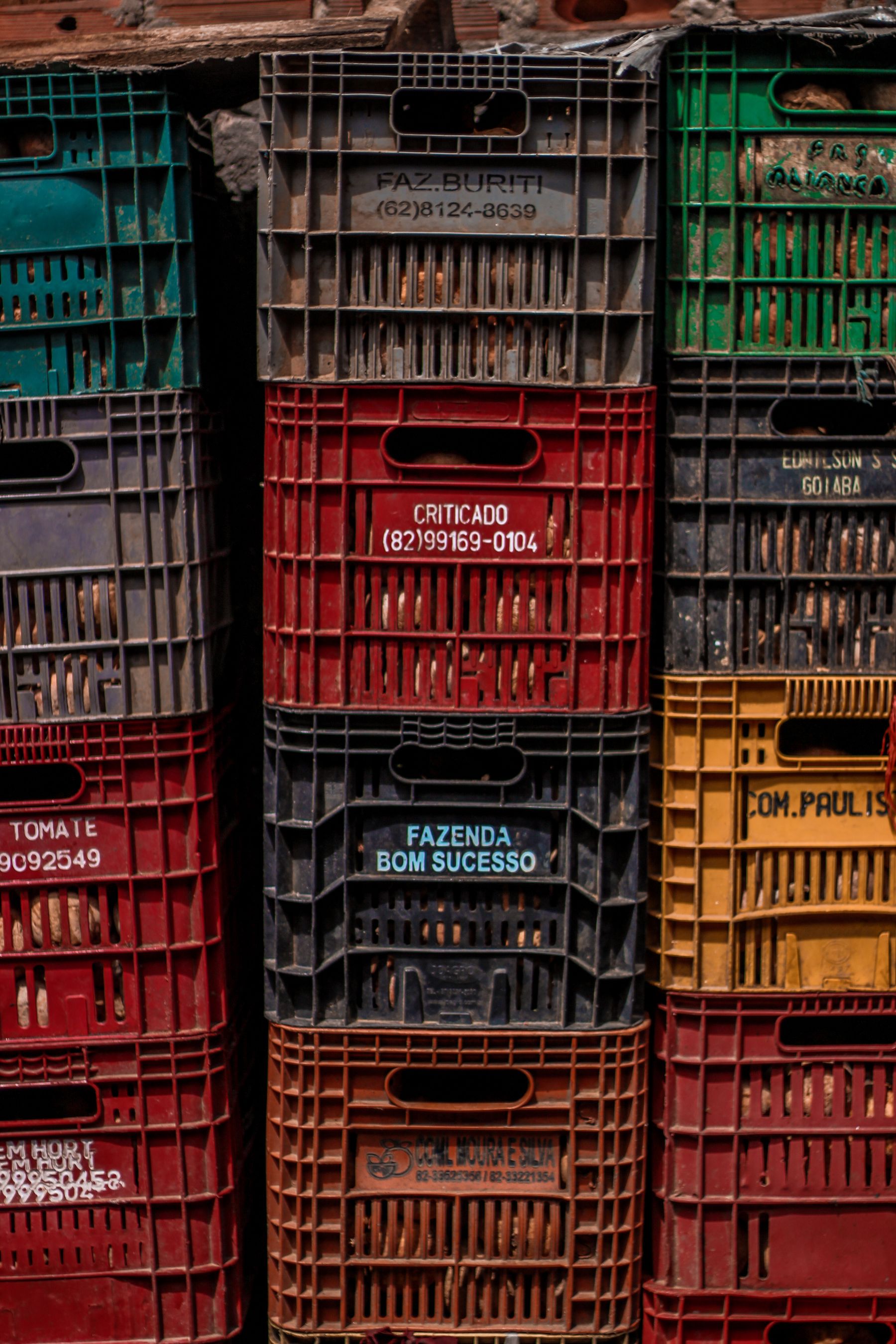
Two separate things happen to a plastic container left in the sun: heating is temporary and passes by evening, while the change made by ultraviolet (UV) light is permanent and cumulative. UV photo-oxidises the plastic from the surface inward. In a study of high-density polyethylene (HDPE) container grades, a Charpy impact strength that had fallen to half its initial value or less after UV exposure was taken as an indicator of distinctly brittle fracture.
The visible part of the change is colour fading, dulling, a surface that leaves powder when wiped (chalking), fine cracks and distortion. The loss of impact strength is invisible; the container keeps doing its job, so the problem often shows up in a knock. The lid's top face and the south-facing side take the most exposure, the shaded face and the inside far less.
The most effective and cheapest measure is shade: put empty containers under a canopy or against a wall and rotate their positions. Then comes monitoring:
- Record container ID, location and which face takes the sun.
- Take the baseline photo from the same distance, light and angle.
- Once a year compare the same faces of the same containers: fading, chalking, location and length of cracks, distortion.
- Take a container with cracks, breakage or distortion out of use.
How many years a container will last in the sun cannot be said, because climate, exposure time and use decide together. Colour is not a measure of UV resistance either; resistance depends on the material and its additives. Ask Aris Makina for the material description and UV protection statement for the exact product code; in a UV laboratory report check that test method, specimen and cycle conditions are written down, because the result is a controlled comparison, not a guarantee of years in the field.

