
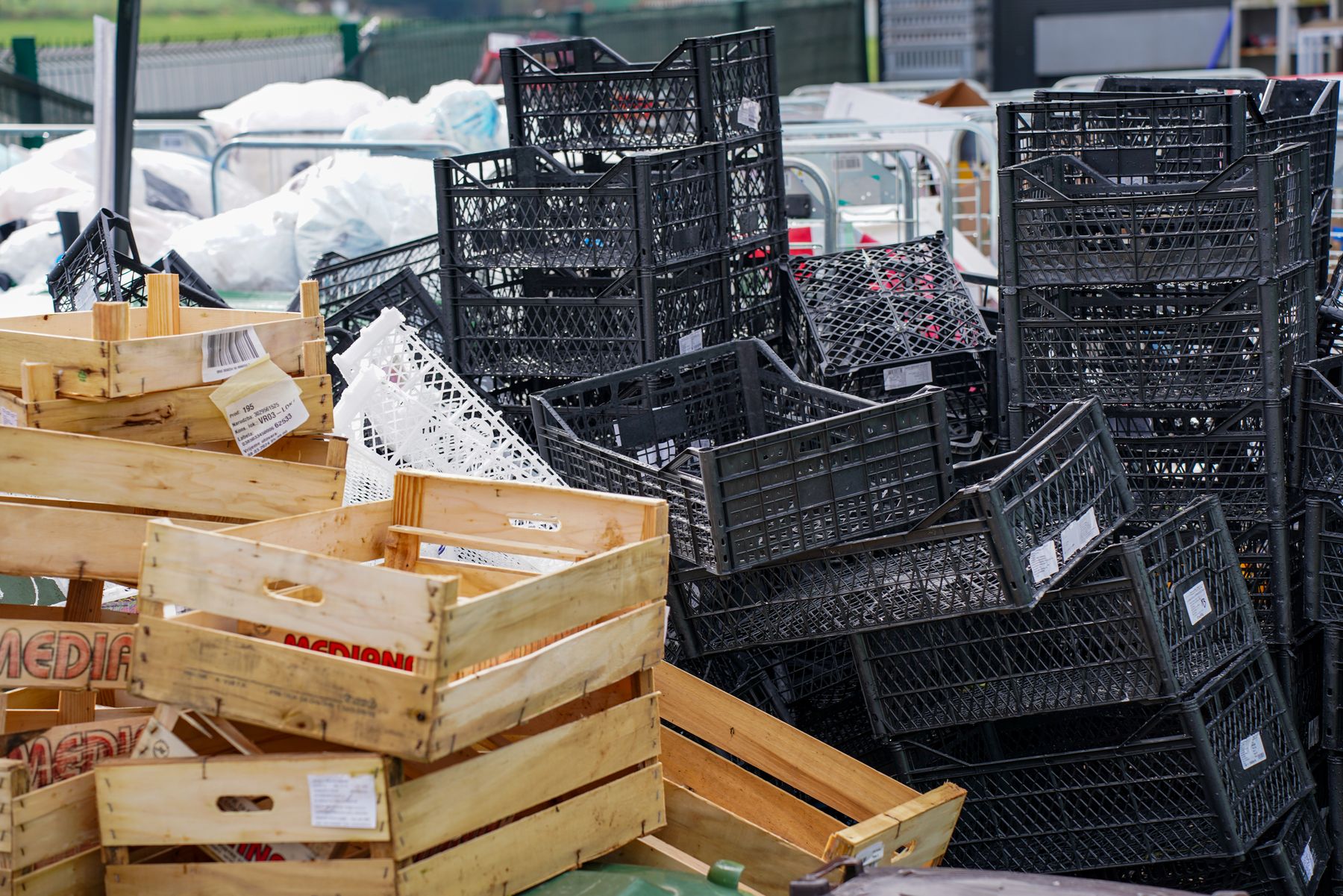
Every plastic has a glass transition temperature. Below it, the amorphous part of the material becomes hard and brittle; above it, the material stays flexible. A frozen food store runs at -18 °C or colder, so the plastic a crate is made of directly affects how many parts break at the freezer door.
| Material | Glass transition | Behaviour in the cold |
|---|---|---|
| High-density polyethylene (HDPE) | About -100 °C | Stays tough even in a freezer |
| Polypropylene (PP) | Between -20 and 0 °C | More brittle than HDPE in the cold |
| Rubber-modified PP | Varies by grade | Better impact resistance, lower stiffness |
When buying crates or boxes, ask for the material grade and its impact strength at low temperature; the room-temperature figure tells you nothing about behaviour in a freezer. GEBHARDT eutectic plates, for instance, have a polyethylene shell.
Set equipment fresh out of a freezer down gently, do not force a frozen lid or latch, and watch the points where forklift tines make contact. Look at a broken part before you throw it away: a flat, clean fracture face points to brittle failure, while a face that stretched before it parted points to overload.

