
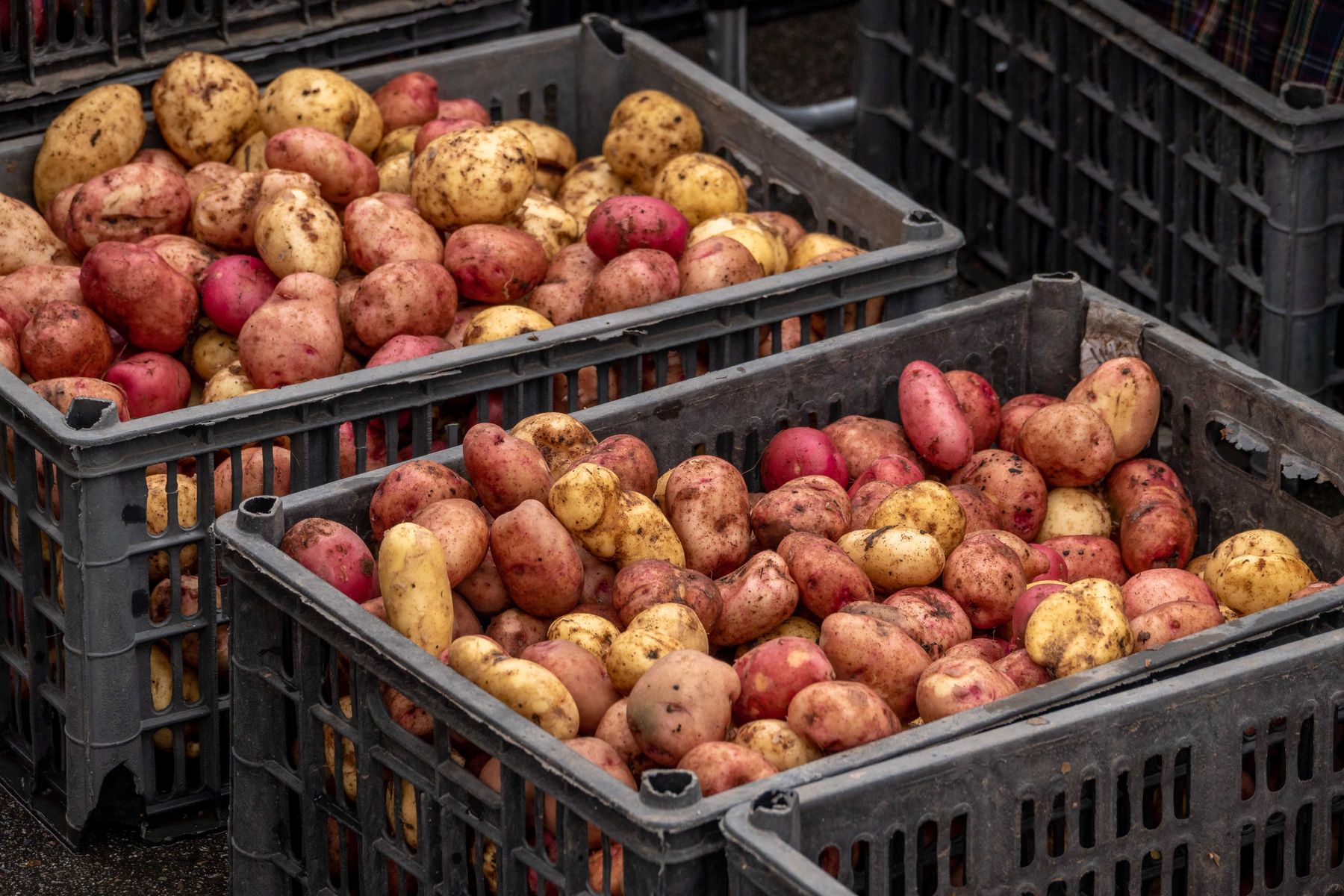
Harvested fruit and vegetables are alive: they respire and give off heat and water vapour. According to the FAO, packaging for a product with a high respiration rate needs openings large enough for gas exchange; that is why ventilation comes before insulation for fresh produce.
Pre-cooling is the rapid reduction of field temperature before processing, storage or refrigerated transport, and it is a separate operation from the crate. Since deterioration is proportional to the time produce spends at high temperature, pre-cooling helps even if the produce later returns to ambient conditions. A ventilated crate keeps the air path open around chilled produce; it does not cool warm produce by itself.
What to expect of the crate
- Light enough for one person to stack; the FAO gives 5 to 20 kg as the usual range for marketing boxes
- Fits the pallet; the most common pallet is 120 x 100 cm and holds 20 to 100 crates depending on crate size
- If reused, easy to clean and take apart, so its volume shrinks on the empty return
- If water or ice cooling is used, keeps its strength when wet
- Natural-fibre baskets are out: they cannot be cleaned and disinfected, and because they are not designed for stacking they bruise the produce
According to the FAO, keeping ethylene-producing and ethylene-sensitive crops in the same room causes sensitivity and odour-transfer problems; on a mixed load, decide which products travel together before choosing the crate.
