
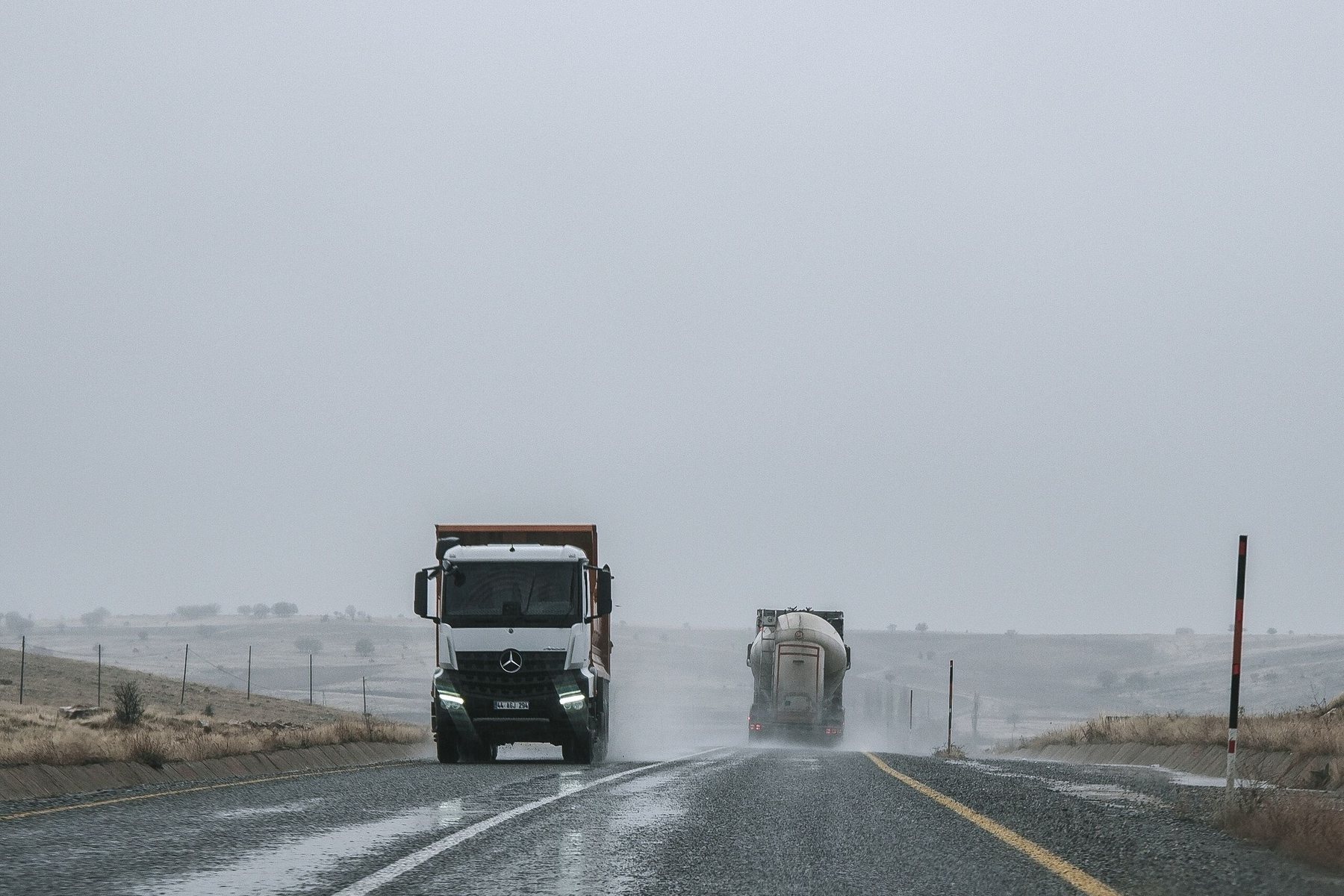
When the outside of a container with a closed shell gets wet, the insulation layer stays dry; trouble starts when damage to the shell lets water in. Insulation works through the still air held inside it, and water conducts heat about twenty times better than air (0.61 against 0.026 W/m·K). Moisture that reaches the insulation therefore raises the wall's heat transfer.
GEBHARDT states that the construction of the Isotec TBX prevents water from entering the insulation layer. The same container can be cleaned by hand, with a pressure washer or in an automatic washing line, so rain is not a risk for a sound unit.
| What to check after rain | Sign of damage |
|---|---|
| Bottom corners and lid edge | Crack, dent, broken part; forks, ramp thresholds and stacking knocks land here |
| Body joints and seal | Separation, gap |
| Inside the container | Damp marks, odour |
If you find a crack, take the container out of use; water that got in expands when it freezes in winter and widens the damage. Send the photo and the container ID to Aris Makina, and we obtain the repair assessment from GEBHARDT and pass it on. Dry a wet container with the lid open in a ventilated place. Where there is no covered dock, opening the lid inside the vehicle also keeps rain from dripping onto the product.

